Mapping
We go through how the work is done today and which systems you already use.
We build internal systems and portals when spreadsheets and email are no longer enough. It can be a work platform with customer records and bookings, a portal where your customers log in or courses that your participants take online. Everything syncs with the systems you already use. We build them the same way as our own tools.
Some of the companies we have worked with
It suits you when the same information is entered in several places or when the team hunts for information in email and spreadsheets.
We start with how the work is done today. Then we first build what removes the most manual steps.
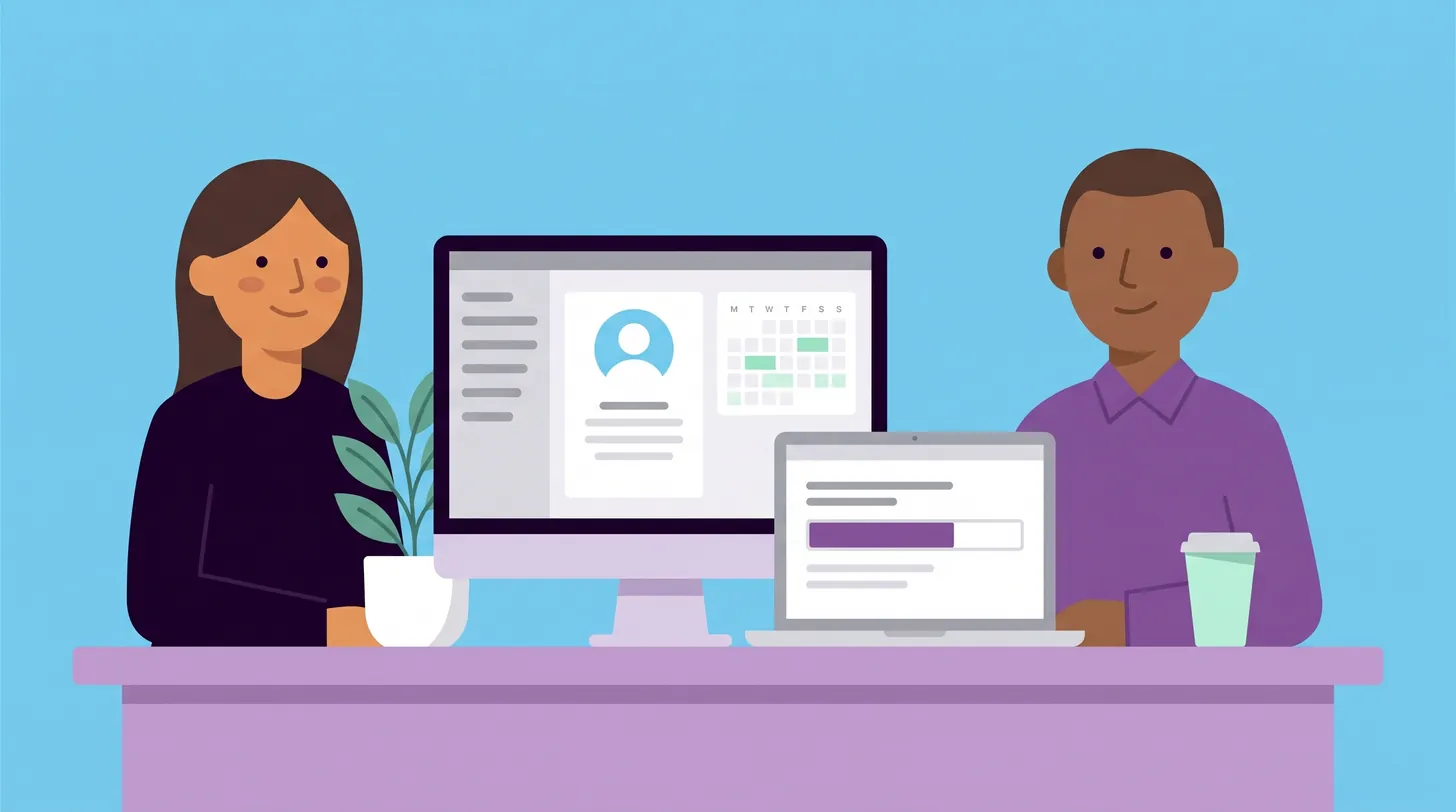
We build whatever removes the most manual steps from your daily work.
One place for customer records, cases, bookings and documents that the whole team works in.
A page where your customers log in and find their documents, reports and contracts.
Courses built in a fixed chain from regulations to a reviewed course that work in the common e-learning platforms.
Bookings, customers and invoices are pulled from the systems you already have. That way no one needs to type the same thing in twice.
The right person sees the right thing. Login can be with a link in an email or with a passkey.
Emails and reminders go out automatically when something happens in the system.
We go through how the work is done today and which systems you already use.
You see how the system will look and work before we build it.
We build the most important parts first and you test them in your own work.
The system is connected to what you already have and existing information is transferred.
We run the system and keep building on it as your needs change.
We build what we use ourselves.
Our own systems for customers, booking, signing and receipts are built the same way.
The system follows your routines. You do not need to change how you work to fit an off-the-shelf program.
Each stage has its own price, which you know before we start.
Here are claims about custom systems that we often come across.
This is what we often see when companies build their own systems.
The result is a new system with the same duplicated work as before.
How to avoid it
Map how the work is done before anything is built.
When a piece of information exists in several systems, no one knows which version is right.
How to avoid it
Decide which system owns each piece of information and sync the rest from there.
Large systems launched in a single step are rarely finished.
How to avoid it
Build in stages and start with what saves the most time.
A system that no one looks after stops working without anyone noticing.
How to avoid it
Decide from the start who runs the system and how faults are flagged.

One person through the whole engagement
You have the same contact from the first meeting. That is also the person who does the work, with AI tools and specialists where they are needed.
Read about who does the workIt depends on how large it is. You get a fixed price for each stage before we start.
A first version can often be in use after a few weeks. After that we keep building in stages.
Yes, if your systems can share data, for example through an open integration. We go through that during the mapping.
The data is yours. We decide together how the system will be run before we start.
Yes. The courses are built in a fixed chain where the regulations are worked out first and the facts are reviewed before the course is delivered. They work in the common e-learning platforms.
The audit is a good place to start. In the meeting we go through which work can be brought together in one place. Free for 79 more days. Valued at 15 500 SEK.
Get an audit